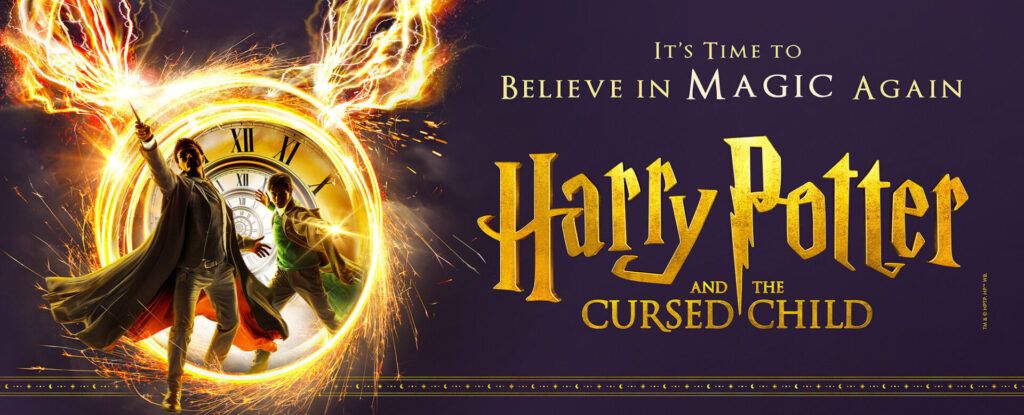
Harry Potter and the Cursed Child is currently performing at the Dr. Phillips Center for the Performing Arts in Orlando (specifically in the Walt Disney Theater).
The production is running for about three weeks, with its final performance scheduled for February 21, 2026.
It’s a bit of a “magic trick” in itself how they managed to condense a two-part, five-hour epic into a single three-and-a-half-hour sitting. Having made its way to the Dr. Phillips Center in Orlando, the touring production of Harry Potter and the Cursed Child offers a high-octane experience that feels right at home in a city built on theme park magic.
Here is a balanced look at the production.
The Highlights: Where the Magic Works
1. Visual Spectacle and Illusion
Even if you aren’t a fan of the script, the stagecraft is undeniable. The “touring” version doesn’t skimp on the jaw-dropping moments.
-
Practical Magic: From the seamless use of Polyjuice Potion transformations to the haunting, high-flying Dementors, the “how did they do that?” factor is constant.
-
Set Design: The use of rotating staircases and suitcases to define space is masterful, making the most of the Dr. Phillips Center’s deep stage.
2. Character Redemption
The play shines brightest when it focuses on the new generation.
-
Albus and Scorpius: The chemistry between Albus Potter and Scorpius Malfoy is the heartbeat of the show. Scorpius, in particular, often steals the performance with a mix of awkward charm and genuine vulnerability.
-
Adult Harry: Seeing a flawed, overworked, and sometimes “wrong” Harry Potter provides a grounded, human element to the wizarding world.
3. Pacing and Energy
The streamlined one-part version starts out like a Firebolt and then slows as the show progresses. The choreography (the “Wand Dance”) and the transitions (love all of the robe flipping) are fluid, ensuring that even during the heavy dialogue scenes, the energy never dips.
The Drawbacks: What Might Break the Spell
1. The “Fan Fiction” Narrative
The biggest hurdle remains the plot. For many die-hard fans, the story feels like high-budget fan fiction.
-
Character Consistency: Some fans find the portrayal of legacy characters (like Cedric Diggory or Ron Weasley) to be inconsistent with the original books.
-
The “Time Turner” Trope: Relying on time travel can feel like a convenient way to revisit old movie sets rather than forging a completely new path.
2. The Condensed Format
While the one-part version is easier on the wallet and the schedule, some of the character development from the original two-part London/Broadway version seems to get lost. Some emotional beats can feel a bit rushed to make room for the next big set piece.
The condensed version seems to be a double-edged sword: it successfully fixes the “bloat” of the original five-hour production but also appears to sacrifice the emotional breathing room that made the characters feel grounded.
The Verdict
If you go in expecting a theatrical experience rather than a perfect literary sequel, you’ll have a blast. It is a technical marvel that proves theater can be just as “cinematic” as a blockbuster movie. However, if you are a purist who is protective of the original book lore, some of the narrative choices might leave you gritting your teeth.
Clint Gamache is the owner of ThrillGeek. He started ThrillGeek to share his love of theme/amusement parks and pop culture with the world. You can find him at Halloween Horror Nights. Also, be sure to follow him on Twitter/X, Instagram @iamcg83