
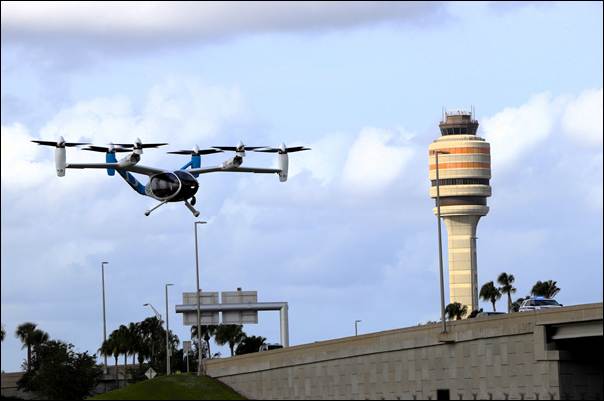
The future of air travel could look a little different in Orlando, and Orlando International Airport just took an important step toward making it happen.
On November 4, 2026, Orlando International Airport (MCO) hosted a demonstration flight by Joby Aviation at its newly constructed Vertipad Atlantis, showcasing electric vertical takeoff and landing (eVTOL) technology and its potential role in the future of transportation across Central Florida.
The demonstration, hosted by the Florida Department of Transportation (FDOT), marked a milestone for MCO as the airport continues exploring how electric aircraft could eventually become part of its operations.
Orlando International Airport Unveils Vertipad Atlantis
The demonstration took place at Vertipad Atlantis, a newly constructed takeoff and landing area designed to support testing and development of eVTOL aircraft.
According to airport officials, the facility is the first vertipad in the United States located onsite at a commercial airport.
Unlike traditional airplanes, eVTOL aircraft are designed to take off and land vertically, similar to helicopters, while using electric propulsion. The technology is being developed as a potential option for shorter-distance transportation, including connections between airports and surrounding communities.
MCO’s new vertipad is intended to help lay the groundwork for a future vertiport capable of supporting commercial eVTOL operations at the airport.
For now, Vertipad Atlantis will serve as a testing location where aviation partners can evaluate the procedures, infrastructure and operational requirements needed to make that future possible.
Joby Aviation Completes Demonstration Flight at MCO
The November 4 demonstration featured an aircraft from Joby Aviation, one of the companies developing electric aircraft for advanced air mobility.
The flight used routes and procedures developed through collaboration involving the Federal Aviation Administration (FAA) and NASA, with coordination from Orlando air traffic controllers.
That coordination was an important part of the demonstration. Operating electric aircraft around a major airport like MCO requires more than simply having a place to land. The aircraft must also fit safely into an airspace already used by commercial airlines and other aviation operations.
The event gave attendees an opportunity to see the aircraft in action while learning more about the planning and infrastructure required to support future electric air transportation.
“This demonstration flight represents far more than a single aircraft taking off and landing. It is a meaningful step toward the future of aviation,” said Lance Lyttle, CEO of the Greater Orlando Aviation Authority.
Lyttle added that bringing together government agencies, industry partners and air traffic professionals at MCO is helping move the technology closer to practical use.
Could Electric Air Taxis Eventually Operate at Orlando International Airport?
While the demonstration is an exciting development, commercial eVTOL passenger service has not yet launched at MCO, and the airport has not announced an opening date for a future vertiport.
The goal of the current testing is to better understand how these aircraft could operate safely alongside existing airport traffic.
Electric vertical takeoff and landing technology could eventually introduce new ways for travelers to move between airports and nearby destinations, although specific passenger routes, fares and service schedules have not been announced as part of this demonstration.
For Orlando, a destination that welcomes millions of visitors each year, the possibility of additional transportation options is particularly interesting.
However, the November flight was primarily about demonstrating the technology and evaluating the procedures necessary to support future operations.
Florida Continues Developing Its Advanced Air Mobility Network
The MCO demonstration is part of a larger effort to develop Advanced Air Mobility (AAM) transportation throughout Florida.
The Florida Department of Transportation and Joby Aviation are planning additional flights across the state to help inform the development of future infrastructure and operating procedures.
The work involves coordination among state transportation officials, federal aviation agencies, airport operators and private aviation companies.
At Orlando International Airport, Vertipad Atlantis will continue providing a location to explore how electric aircraft could be integrated into a busy commercial airport environment.
Although there’s still work to be done before travelers can book an electric aircraft flight from MCO, the successful demonstration offers a look at what the next generation of airport transportation might involve.
For more information about Orlando International Airport, visit FlyMCO.com.

Janine is a theme park and pop culture nerd from an early age. Since 1994, she’s been traversing the theme park world and has enjoyed all things from Halloween events to new ride releases and beyond. When she’s not at a theme park, she’s probably at a concert or doing something fun with her kiddo.